


Leadership blind spots are one of the most overlooked reasons hiring goes wrong
A leader is a role that requires credibility, reliability, and responsibility. We have leaders in every corner of our lives. But the qualities of a leader are not about excelling at everything. Instead, it’s about collecting all the pieces and putting them in the right place.
The term “blind spot” refers to a lack of awareness and insight. There have been several instances in which leaders’ blind spots have influenced the recruitment process due to biases, optimism, and misjudgment, which can affect the team in the future. Usually, when things go wrong, the blame falls on the employees, which is fair. But there’s the other side, where leaders will also be held responsible because whatever the result of the task, it reveals a leader’s strengths as well as their blind spots.
Let’s explore the blind spots leaders tend to overlook, as they can impact the quality of hiring.
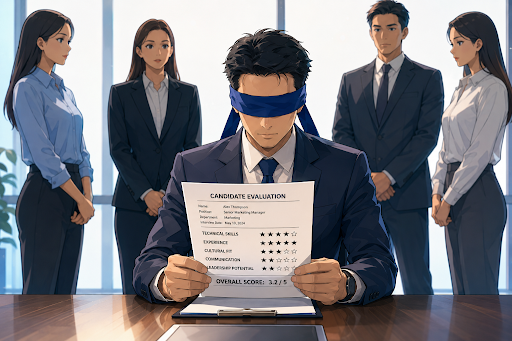
1. Overreliance on Gut Feeling
There are times when leaders hire relying on their gut feeling, believing they’ve found the right talent instantly. Sometimes saying things based on intuition can be good, but organising things according to that in these criteria can be crucial, as it may lead to biased decisions in hiring.
The blind spot in this intuitive hiring process would be the leader choosing a candidate who is similar to them in personality and communication style. This restricts innovation because the company can grow with people who have different ideas, which can strengthen the team.
The solution to this would be to conduct structured interviews while balancing intuition, selecting candidates through competency-based forms, and using data-driven hiring metrics.
2. The Trap of Cultural Fit
A leader choosing a candidate based on culture might sound nice at first. They want the employees who fit seamlessly into the company culture and work well with the team. But that’s where things get stuck. Choosing a candidate based on appearance or similarity in thinking can reduce diversity within the team and the company.
Sometimes, the candidates are hired based on their looks and the way they put out things. A leader might think, “Yes, this person would just blend in with our team.” This kind of disrupts the core intention behind hiring the candidate. Over time, it will impact the creativity of the team and limit its adaptability.
It’s better to shift the mindset to “What value and growth will they add to our team? which encourages diversity and long-term growth.
3. Accelerating The Hiring Process.
There are times when the hiring team feels pressured to fill a position quickly to support the team and the company. Mistakes can happen in these situations, like failing to notice a candidate’s credentials or potential. If you rush through the interview process, you may not ask the important questions that will help you determine how the candidate will add value to your team. Making a hasty decision can lead to future performance problems that can affect team morale and collaboration.
There is always another side that could go wrong when decisions are made in a hurry, and this can also affect the hiring process by disrupting teamwork. Instead, make the hiring process more structured and resist urgency when selecting candidates for the company’s growth.

4. Overlooking the Soft Skills
When a potential candidate shows strong technical skills, they often impress the leadership during the hiring process. A person who has credible qualifications in technical skills, such as SaaS web apps or cloud computing software, could be easily chosen.
However, it will be a problem when one assumes that becoming good at technical skills will mean success for the organisation. It would become an issue in the future if the team cannot perform properly due to the poor interpersonal skills of technically sound candidates.
Interpersonal skills are also important to have a balanced team. It needs empathy, adaptability, and communication, regardless of the person with impressive technical ability. During interviews, these should be assessed alongside technical abilities to get a balanced view of the candidate’s potential.
5. Failing in Employer Branding
Most of the time, leaders focus on grabbing candidates’ attention, but often miss that candidates also evaluate the company’s reputation. When a person is shortlisted and called for the next stage, the first thing they do is gather information about the company and its market reputation. If the company is well represented on social media platforms like LinkedIn, people are naturally drawn to it and put in their best effort to get an opportunity to join.
Ignoring the importance of a company’s presentation is a huge blind spot. The organisation with the stronger brand might attract more potentially qualified candidates.
It’s important to be clear in your communication when you’re interviewing. Showcase a company’s success on media platforms. Bring the organisation’s values and commitment to the people. If the candidate is really excited to join the team, that will be more beneficial.
6. Complacency with the current recruitment system
Sometimes leaders assume that the current hiring process is effective and doesn’t need any changes, based on the success they’ve had so far. This leads them to conclude that it always works.
This is a blind spot that will have a negative effect on the recruiting system itself when they overestimate the efficiency of the current recruiting system and underestimate the need for change. The system will become obsolete. The workplace will change. We can miss out on opportunities and end up with lower-quality talent.
To fix this problem, the recruiting process must be regularly evaluated, and candidate feedback must be solicited. Any improvement of the organisation is always useful.
7. Poor Communication
Hiring is not a solo sport. It’s a partnership between the leaders, HR, and the team manager. The team manager will help to understand the missing role in the team to keep the team moving.
But sometimes the biggest blind spot is when leaders ignore this and assume everyone is an “ideal candidate,” which leads to a mismatch of expectations. The team’s future direction might confuse the candidate and the company’s team. Any team project will have inconsistent assessment and unnecessary delay.
Candidates can get mixed signals and may lose interest in working for the team and company. The solution for this would be to clarify the actual role requirements, communicate about the roles and their priorities during the interview process itself, which would ensure consistency and accelerate decision-making for the team.
Why Leadership Blind Spots Go Unnoticed
Leadership blind spots don’t appear overnight — they build up slowly over time, often disguised as “experience” or “gut instinct.” Most leaders don’t even realise they carry leadership blind spots, because by definition, these gaps sit outside a person’s own self-awareness. That’s what makes leadership blind spots so difficult to fix — if a leader could see them clearly, they wouldn’t be blind spots in the first place.
A leader with unchecked leadership blind spots can unknowingly repeat the same hiring mistakes year after year, mistaking familiarity for good judgment. Over time, these leadership blind spots quietly shape who gets hired, who gets overlooked, and who never makes it past the interview stage. A team built around one leader’s leadership blind spots can look fine on paper while slowly losing the diversity and perspective it actually needs to grow.
The good news is that leadership blind spots are not permanent. With structured hiring processes, honest feedback, and a willingness to question one’s own instincts, most leadership blind spots can be identified and corrected before they cause lasting damage to a team’s growth and culture.
How Leadership Blind Spots Shape Team Culture
Leadership blind spots don’t just affect a single hiring decision — they slowly shape the entire culture of a team. When a leader repeatedly hires under the same leadership blind spots, the team starts to look, think, and communicate in one narrow pattern, even if no one intended it that way. This is one of the most damaging effects of leadership blind spots, because it happens gradually and rarely gets questioned until performance or innovation begins to suffer.
Leadership blind spots also tend to get reinforced by success. If a leader hires a few strong performers despite their leadership blind spots, they may assume their instincts are flawless, when in reality they simply got lucky. This false confidence allows leadership blind spots to go unchecked for years, quietly limiting the range of skills, backgrounds, and ideas within the organisation.
Addressing leadership blind spots requires more than good intentions — it requires structured feedback loops, diverse interview panels, and a willingness to revisit hiring decisions with honest reflection. Leaders who actively work to uncover their leadership blind spots build teams that are more adaptable, resilient, and genuinely diverse in thought.
Conclusion.
Leadership blind spots in the hiring process do not mean they are incompetent for that job. It’s a common human natural behaviour. But yes, given the position, they should challenge it. A leader should be able to see a candidate’s true potential. Structure a hiring system that can counteract bias and ensure fair selection. Welcome diversity to drive innovation and continuously adapt to the changing workforce dynamics within the team. Hiring is the process that changes two important things.
- One, it allows a candidate to grow a career path.
- Another is helping the organisation to be more productive.
Ultimately, it’s like helping and strengthening each other. Leaders who can see their blind spots will not only be better at hiring but also build stronger, more resilient organisations.
Frequently Asked Question(FAQs)
1. What are the blind spots of a leader in hiring?
A) Blind spot is a lack of awareness in a leader by hiring a candidate based on intuition, communication style, rushing the hiring process, overlooking the soft skills, and many other factors that would lead to bias in hiring and impact the company’s growth.
2. How does the blind spot impact the organisation?
A) It would narrow down the innovation and bring less diversity in the teamwork, which can result in a disruptive environment and no growth of the organisation.
3. What are the solutions to overcome the blind spots?
A) One should always embrace change and bring innovation and diversity to the company. It is better to follow a structured recruitment process based on the role required for the company.
4. Is it possible to overcome the blind spots completely?
A) There’s no proper evidence or an example that it can be solved entirely. But also, it is definitely possible to be as fair as possible in the hiring process. The only challenge is that leaders should recognize the blind spots and act on them, which can make the organisation stronger.
