


Introduction
The hiring system is built to measure real potential through a very limited format. For something that shapes careers and lives, it’s often felt surprisingly impersonal. But that system is starting to crack — and what’s replacing it is not necessarily easier. Just more real.
So if you’re wondering where to head: for companies and for people trying to get hired, here’s the short answer: Less about what you say you are. More about what you can show.
The future is already unfolding quietly, and the shifts are significant enough that both recruiters and candidates need to understand them now — not in five years.As we move into the next decade, companies that embrace innovative recruitment practices will be better positioned to attract top talent, improve hiring quality, and build workforces.
Understanding the latest Recruitment Trends can help organizations prepare for the future and gain a significant advantage in the talent market.To remain competitive, businesses must stay informed about emerging Recruitment Trends and adapt their strategies accordingly.
Skills Over Degrees: The Biggest Shift in Recruitment Trends
For the longest time, the first question in any hiring process was: “Where did you study?” The future of recruitment is flipping this. It’s gradually becoming: “What have you actually done?”
That shift makes sense. Companies are increasingly hiring people based on:
- Projects they’ve worked on and portfolios they’ve built
- Internships, freelance work, and real-world contributions
- Self-taught skills backed by demonstrable output
Over the next decade, skills-based hiring will become the norm — not in a dramatic “degrees don’t matter at all” way, but in a quieter shift where credentials are just one part of the story, not the whole thing.
You don’t just need knowledge. You need proof. The most important career insight for the next decade.
AI in Hiring: Not a Takeover, But a Filter
A lot of people fear that AI recruitment technology will completely take over hiring. It won’t. But it is becoming the first layer of judgment in many modern hiring processes.
Companies are already using AI to:
- Scan and rank resumes faster than any human could
- Identify patterns in previously successful hires
- Predict which candidates are likely to perform well in a role
- Automate repetitive, high-volume parts of recruiting
From the company’s side, it’s efficient. From the candidate’s side, it means one thing: clarity matters more than ever. Messy resumes and vague skill descriptions won’t just confuse a recruiter — in an AI-driven hiring pipeline, they might stop you from being seen at all.
Actively looking for opportunities right now? Explore open positions on NonStop Hiring — a platform built for the modern job seeker.
Remote Hiring Trends: Your Competition Is Now Global
Remote work didn’t just change where people work. It fundamentally changed how companies think about talent acquisition. Earlier, your competition for a role was mostly people in your city. Now? It’s potentially anyone in the world.
This shift in the job market trends works both ways — more opportunity, but more competition. The question every candidate must answer is: Why should someone pick you over hundreds of other options?
- Because you communicate clearly and concisely
- Because your work speaks for itself — publicly, visibly
- Because you show initiative without being asked
- Because you’re genuinely easy to work with
Remote hiring removes location as an advantage. Your actual value becomes the only thing left.

Candidate Experience Will Become a Hiring Strategy
The delayed replies. The vague “we’ll get back to you soon.” The ghosting after three rounds of interviews. That used to be normal. In the future of talent acquisition, it won’t be.
Candidates have always remembered how companies treat them during the process. But now, with employer review platforms and social media, that experience travels. The best candidates — the ones everyone wants — will increasingly choose companies that:
- Respect their time and move decisively
- Communicate clearly at every stage
- Don’t drag the process unnecessarily
In the evolving hiring landscape, candidates are evaluating companies just as much as companies are evaluating them.
Data-Driven Hiring Is Replacing “Gut Feel”
“Something just felt off.” That’s been a valid hiring rationale for years. But data-driven recruitment is changing that. Instead of instinct, companies will increasingly ask:
- What kind of candidates actually perform well in this role?
- Which skills truly lead to success here?
- Which hiring channels and sources bring better long-term employees?
This doesn’t mean hiring becomes robotic. It just means decisions become more informed. Less guesswork. More patterns. And for high-quality candidates, this is actually good news — data-driven hiring decisions make it harder to overlook people who consistently deliver.

Employer Branding: Companies Must Compete for Talent
Posting a job and waiting for applications won’t be enough anymore. Because good candidates have options. So companies will have to actively sell themselves in the future job market.
Expect far more investment in:
- Behind-the-scenes content showing real work culture
- Employee stories and authentic testimonials
- Honest conversations about expectations and growth
- A strong, credible online presence across platforms
Employer branding is no longer optional — it’s a core part of any competitive talent acquisition strategy.
Flexible Work Arrangements Are Reshaping Employment
Full-time jobs aren’t disappearing. But they’re no longer the only option, and increasingly, they’re not everyone’s preference. Some people want flexibility. Some want multiple income streams. Some just don’t want to be tied to one employer.
So companies are adapting their hiring models to include:
- Freelancers and independent contractors
- Consultants brought in for specific expertise
- Project-based contributors with defined scopes
This doesn’t mean stability disappears — it means that the shape of stable work is changing. The gig economy and hiring are merging into something more fluid than either used to be.

Soft Skills in the Workplace: The New Differentiator
Technical skills are more accessible than ever. If someone wants to learn design, coding, marketing, analytics, or almost any professional skill, there’s a course, tutorial, or guide waiting for them online. Information is no longer scarce. And because of that, technical knowledge alone won’t be enough to truly stand out in future hiring criteria.
What’s genuinely valuable are the things you cannot learn in a weekend. The things that actually move careers forward — things like:
- Clear, confident communication with stakeholders
- Emotional intelligence and self-awareness in teams
- Creative thinking when faced with ambiguous problems
- Reliability and accountability under pressure
- Adaptability when priorities shift
Soft skills are becoming more valued in hiring — not because technical skills matter less, but because so many people now have access to similar technical knowledge. The real difference often comes down to how someone works, not just what they know.
In the future, companies won’t just look for people who can do the job. They’ll look for people with whom others actually want to work.
Employer Branding Becomes a Competitive Advantage
In the next decade, employer branding will play a critical role in attracting top talent. Candidates now evaluate companies as much as companies evaluate candidates.
Key elements of employer branding:
- Workplace culture
- Employee experience
- Career growth opportunities
- Company values and purpose
- Online reputation
Why it matters:
A strong employer brand reduces costs and increases application quality. Companies with positive reputations attract better talent even before job postings are made.
Social media, employee testimonials, and transparency will continue to shape employer perception.
Data-Driven Recruitment Becomes Essential
Recruitment is becoming increasingly data-centric. Organizations now rely on recruitment metrics and analytics to make informed decisions.
Key data points include:
- Time to hire
- Cost per hire
- Quality of hire
- Candidate conversion rates
- Source effectiveness
Why it matters:
Data-driven recruitment eliminates guesswork and improves efficiency. Companies can identify bottlenecks, optimize funnels, and predict hiring outcomes more accurately.
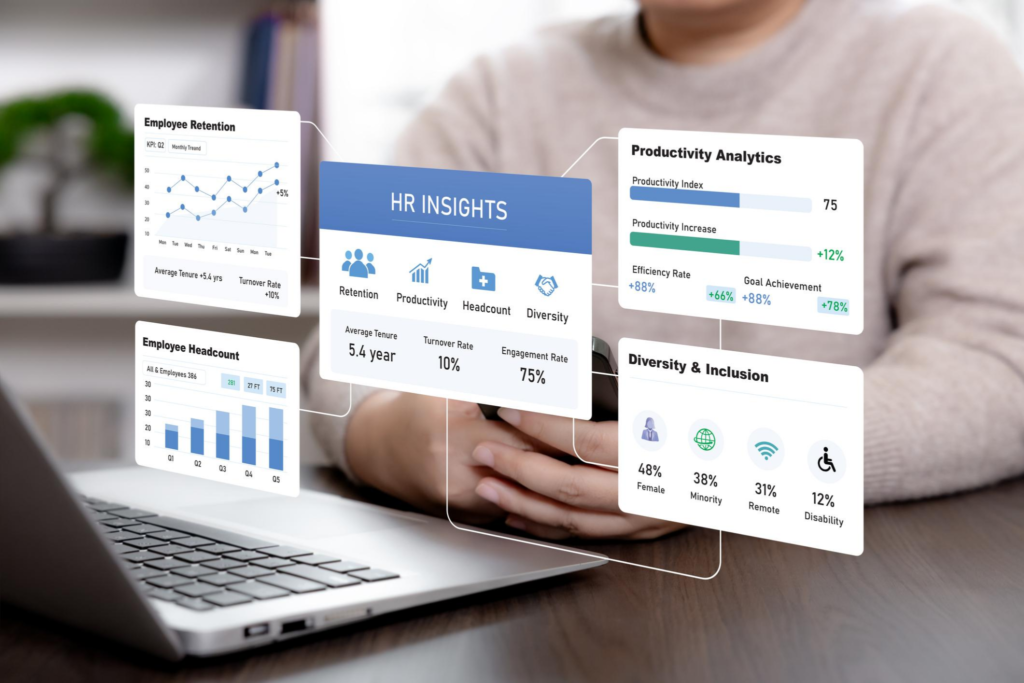
Over the next decade, recruitment dashboards will become standard tools in HR departments.
Talent Intelligence Platforms Gain Popularity
Talent intelligence platforms are emerging as powerful tools for strategic hiring. These systems analyze internal and external talent data to help companies make better decisions.
What they provide:
- Market salary benchmarks
- Skill availability insights
- Competitor hiring trends
- Workforce planning data
- Talent mapping
Why it matters:
These platforms enable organizations to understand the talent landscape in real time, helping them stay competitive in tight labor markets.
Internal Mobility and Talent Redeployment Increase
Companies are increasingly focusing on developing talent from within rather than hiring externally for every role.
Internal mobility includes:
- Promotions
- Role transfers
- Skill-based redeployment
- Cross-functional movement
Why it matters:
Internal hiring reduces recruitment costs, improves retention, and boosts employee engagement. Employees are more likely to stay with companies that offer growth opportunities.
Over the next decade, internal talent marketplaces will become more common.
Diversity, Equity, and Inclusion (DEI) Becomes Central
Diversity is no longer a corporate initiative—it is a core recruitment strategy.
DEI-focused hiring practices:
- Structured interviews
- Blind resume screening
- Inclusive job descriptions
- Diverse panels
- Bias-free assessment tools
Why it matters:
Diverse teams are more innovative, adaptable, and productive. Companies with strong DEI strategies also attract broader talent pools and improve employer reputation.
This trend will continue to grow as organizations focus on fairness and representation.
Automation of End-to-End Hiring Processes
Automation is transforming every stage of recruitment, from sourcing to onboarding.
Automated processes include:
- Job posting distribution
- Candidate screening
- Interview scheduling
- Background verification
- Offer generation
Why it matters:
Automation reduces hiring time, improves efficiency, and minimizes human error. It also allows HR teams to focus on strategic planning rather than repetitive tasks.
End-to-end recruitment automation will become standard in modern HR systems.
Candidate Experience Becomes a Key Hiring Metric
Candidate experience is now a critical factor in recruitment success. Organizations are prioritizing smooth, transparent, and engaging processes.
Key components:
- Fast communication
- Clear job descriptions
- Transparent interview processes
- Feedback after interviews
- User-friendly application systems
Why it matters:
A positive candidate experience improves employer branding and increases offer acceptance rates. Poor experiences can damage reputation and reduce future applications.
Gig and Freelance Workforce Expansion
The gig economy continues to expand, influencing how companies build teams.
Key trends:
- Short-term contracts
- Freelance talent platforms
- Project-based hiring
- On-demand specialists
Why it matters:
Gig workers provide flexibility, cost efficiency, and access to specialized skills. Many companies now use a hybrid workforce model combining full-time employees and freelancers.
Predictive Hiring Becomes Mainstream
Predictive analytics is reshaping recruitment decision-making.
Predictive tools analyze:
- Candidate success probability
- Retention likelihood
- Performance potential
- Cultural alignment
Why it matters:
Instead of relying on intuition, companies can forecast hiring success with data-driven models. This reduces bad hires and improves long-term workforce quality.
Stronger Focus on Employer-Employee Alignment
Modern recruitment emphasizes alignment between company values and employee expectations.
Key focus areas:
- Cultural fit
- Work-life balance
- Career development
- Purpose-driven work
Why it matters:
Misalignment leads to high turnover and poor performance. Companies that prioritize alignment build more stable and engaged teams.
Global Talent Market Expansion
The talent market is becoming borderless. Companies are hiring globally to overcome skill shortages.
- International compliance
- Cross-border payroll systems
- Remote onboarding infrastructure
- Global workforce management
Why it matters:
Global hiring expands talent access and improves innovation by bringing diverse perspectives into organizations.
Continuous Recruitment Becomes the New Normal
Recruitment is shifting from a project-based activity to a continuous process.
Continuous recruitment includes:
- Always-on talent pipelines
- Ongoing candidate engagement
- Proactive sourcing strategies
- Talent community building
Why it matters:
This approach ensures companies are always prepared for hiring needs, reducing delays and improving agility.

Recruitment Becomes a Core Business Function
One of the biggest shifts in the coming years is the repositioning of recruitment as a core business driver rather than an HR support activity.
Why this shift matters:
- Talent directly influences revenue generation
- Hiring speed affects market expansion
- Workforce quality impacts innovation
- Retention affects operational stability
Executives are now treating hiring decisions with the same importance as financial planning and product strategy. This elevation of recruitment is transforming how organizations structure their talent acquisition teams.
Instead of isolated HR departments, companies are building integrated talent units aligned with business objectives.
Rise of Real-Time Hiring Intelligence
One of the most impactful recruitment trends is the rise of real-time hiring intelligence systems. These systems provide live insights into every stage of the hiring funnel.
Real-time intelligence tracks:
- Candidate pipeline activity
- Interview performance data
- Offer acceptance patterns
- Market hiring fluctuations
- Talent availability shifts
Why it matters:
Real-time insights allow companies to react immediately to bottlenecks instead of discovering them weeks later.
For example:
- If offer acceptance drops suddenly, compensation strategy can be adjusted instantly
- If sourcing channels weaken, budgets can be reallocated quickly
- If time-to-hire increases, interview processes can be streamlined
This level of responsiveness dramatically improves hiring efficiency.
Hyper-Personalized Candidate Journeys
In the next decade, candidate experience will move beyond standard workflows into hyper-personalized hiring journeys.
What personalization includes:
- Tailored job recommendations
- Customized communication based on candidate behavior
- Adaptive interview processes
- Role-specific content and engagement strategies
Why it matters:
Candidates now expect experiences similar to consumer platforms like Netflix or Amazon—personalized, intuitive, and responsive.
Companies that fail to personalize recruitment journeys risk losing top candidates early in the process.
Personalization also increases engagement, improves conversion rates, and strengthens employer branding.
Conclusion
The future of hiring is evolving rapidly, driven by technology, globalization, and changing workforce expectations. The top recruitment trends driving the future of hiring in the next decade highlight a shift toward smarter, faster, and more strategic hiring systems.
Organizations that embrace AI, data-driven recruitment, skills-based hiring, remote workforce models, and strong employer branding will be best positioned for success.
Ultimately, recruitment is no longer just about filling roles—it is about building future-ready organizations capable of thriving in a competitive global economy.
Companies that adapt to these trends today will become the industry leaders of tomorrow.
For a long time, the whole process was about what looked great on paper — degrees, polished resumes, flawless interview answers, and neatly listed years of experience. The evolution of hiring means building systems that are fairer, more thoughtful, and less driven by outdated proxies. Systems that focus on real potential instead of chasing signals of perfectionism.
For individuals, this shift changes the focus toward:
- Developing skills that stay relevant even as trends shift
- Doing work that reflects what you genuinely think and how hard you try
- Communicating in ways that help others understand your value
- Being reliable consistently enough to earn real trust over time
Standing out won’t come from memorizing the right answers. It’ll come from being the most authentic, capable, and visible version of yourself.
Frequently Asked Questions
1. If degrees aren’t the priority anymore, what actually matters in hiring?
Building things that demonstrate your ability is what really matters. Portfolios, project case studies, and real-world experience carry far more weight than credentials alone in modern skills-based hiring.
2. How should candidates stay relevant as the hiring landscape evolves?
Pick a direction and keep getting better at it. Don’t just consume information — apply it. Applied knowledge is what turns into a real, demonstrable skill that shows up in future hiring criteria.
3. Will it get harder to find jobs as hiring evolves over the next decade?
Competition increases, particularly for remote roles, but so does the number of opportunities. For skilled, visible candidates, the future job market offers more access than ever before — it balances out.
4. What should candidates start doing right now to prepare for future hiring trends?
Start showing your work publicly — not when it’s perfect, but now. Share projects, document your process, build things in the open. In the evolving hiring landscape, visibility is what gets you hired. You can also browse current openings at NonStop Hiring to understand what employers are actively looking for.
