


Discover how digital hiring platforms improve candidate matching to help teams hire faster with better accuracy
Introduction: Why Candidate Matching Needs a Smarter Approach
Hiring has changed, and honestly, it had to.
There was a time when recruiters could sit with a stack of resumes, skim through them, and still manage to find decent candidates. But today, that approach simply doesn’t work.
Applications come in at scale. Roles demand precision. And hiring decisions directly impact business growth.
Manual screening slows everything down. Worse, it increases the chances of missing out on strong candidates just because their resumes don’t perfectly match a job description.
That’s exactly where digital hiring platforms come in.
They bring structure, intelligence, and consistency into the hiring process. Instead of guessing who might be a good fit, recruiters can now rely on systems that actually understand candidate profiles.
So, how do digital hiring platforms improve candidate matching in a real, practical way?
1. Moving Beyond Keywords to Understand Real Skills
Traditional hiring systems rely heavily on keyword matching.
If a resume contains the right words, it gets shortlisted. If it doesn’t, it’s often ignored even if the candidate is actually qualified.
Digital hiring platforms take a more thoughtful approach.
Instead of just scanning for keywords, they focus on understanding what a candidate can actually do. That includes:
- Skills in action
- Real responsibilities
- Transferable experience
For instance, someone working in “client acquisition” could still be a strong fit for a “business development” role. The wording may differ, but the capability is the same.
This shift from keyboard matching to skill-based understanding makes candidate matching more accurate and far less restrictive.
And honestly, it helps uncover talent that would otherwise be missed.
2. Using AI and Machine Learning to Improve Matching Accuracy
Digital hiring platforms process information as well as learn from it.
Over time, they analyze patterns like:
- Which candidates performed well after hiring
- Which profile stayed longer
- What skills actually contributed to success
This allows the system to improve its matching logic continuously.
So instead of asking: “Does this resume look relevant?”
It starts asking: “Is this candidate likely to succeed in this role?”
That’s a big shift.
It turns hiring into a more predictive and data-driven process, rather than something based purely on judgment.
And for recruiters, this means less guesswork and better decisions.
3. Automating Resume Screening Without Losing Quality
Let’s be honest, manual resume screening is exhausting.
Going through hundreds of applications takes time, and consistency often suffers.
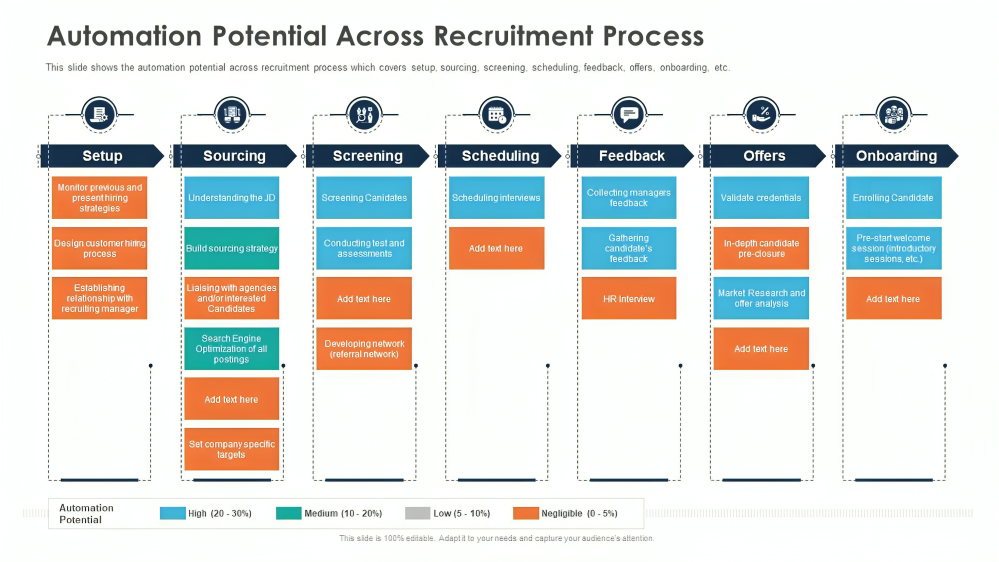
Digital platforms solve this by automating the entire screening process.
They can:
- Parse resume instantly
- Extract key Information
- Rank candidates based on fit
- Create shortlists within seconds
What this really means is recruiters no longer have to spend hours filtering profiles.
Instead, they start with a per-qualified pool of candidates.
And because the system follows the same criteria every time, it also improves consistency across the hiring process.
4. Turning Data into Better Hiring Decisions
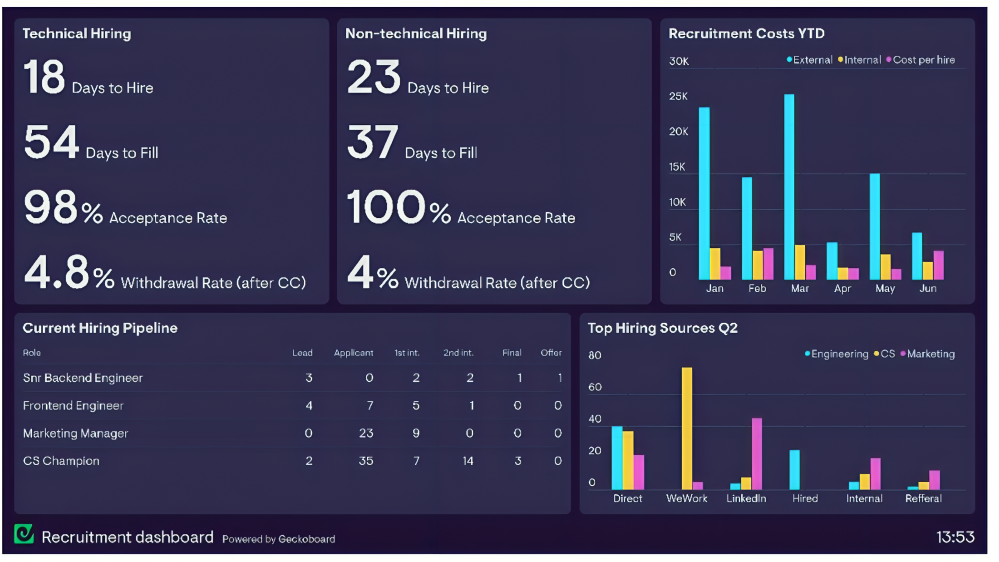
One of the biggest advantages of digital hiring platforms is visibility.
Everything becomes measurable.
Recruiters can track:
- Time-to-hire
- Candidate drop-off rates
- Source effectiveness
- Conversation rates
This data helps teams understand what’s working and what’s not.
For example:
- Which channel brings the best candidates
- Where candidates lose interest
- Which role takes longer to fill
Over time, this leads to better decision-making and more refined candidate matching strategies.
Because hiring isn’t just about filling positions, it’s about improving the process continuously.
5. Reducing Bias Through Structured Evaluation

Bias in hiring is often unintentional, but it still affects decisions.
Recruiters may lean toward:
- Familiar backgrounds
- Certain companies
- Specific education profiles
Digital hiring platforms help reduce this by introducing structure.
They:
- Standardize evaluation criteria
- Focus on skills and qualifications
- Use scoring systems for comparison
This ensures candidates are assessed more objectively.
While no system is completely bias-free, structured evaluation makes the process significantly fairer and more inclusive.
And that matters not just ethically, but for building stronger teams.
6. Improving Candidate Experience Along the Way
Candidate experience often gets overlooked.
But it plays a huge role in hiring outcomes.
Slow responses, unclear timelines, and poor communication can push good candidates away.
Digital hiring platforms improve this by:
- Automating updates
- Simplifying application steps
- Keeping candidates informed
What this really does is create a smoother, more transparent process.
Candidates know where they stand.
And when the experience improves, so does the likelihood of securing top talent.
7. Building Talent Pipelines Instead of Hiring Reactively
Hiring shouldn’t always start from scratch. Yet many teams only begin searching when a role opens.
Digital hiring platforms change this by enabling continuous talent pipelines.
They allow recruiters to:
- Store candidate profiles
- Track past applicants
- Build long-term relationships
So when a role becomes available, suitable candidates are already there.
This reduces hiring pressure and significantly improves matching speed.
It also means better candidates because you’re not rushing decisions.
Integrating the Entire Hiring Workflow
Another major advantage is integration.
Digital hiring platforms bring everything into one place.
From:
- Job postings
- Candidate tracking
- Interview scheduling
- Feedback collection
Everything works together.
This reduces confusion, improves collaboration, and speeds up decision-making.
When systems are connected, candidate matching becomes smoother and more efficient.
Common Challenges in Digital Candidate Matching
Even with all these advantages, challenges still exist.
Some common ones include:
- Over-reliance on automation
- Poorly defined job roles
- Incomplete candidate data
- Algorithm bias, if not monitored
That’s why balance is important.
Technology should support decisions, not replace human judgment.
Frequently Asked Questions
What are digital hiring platforms?
Digital platforms are tools that streamline recruitment by using AI, automation, and data to manage sourcing, screening, and candidate matching.
How do digital hiring platforms improve candidate matching?
They analyze skills, experience, and data patterns to match candidates more accurately than manual screening methods.
Do these platforms replace recruiters?
No. They support recruiters by handling repetitive tasks, allowing them to focus on strategic decisions.
Can digital hiring platforms reduce bias?
Yes, structured evaluation and skill-based matching reduce bias, but regular monitoring is still necessary.
Are they suitable for small businesses?
Yes. Many platforms offer scalable solutions that help small teams hire efficiently.
Conclusion
Candidate matching is no longer just about resumes.
It’s about understanding people, predicting outcomes, and making smarter hiring decisions.
Digital hiring platforms make this possible.
They bring together automation, data, and intelligence to help teams hire faster without compromising quality.
And in a competitive hiring landscape, that’s not just helpful. It’s essential.
Call to Action
Is your hiring process helping you find the right candidates or slowing you down?
Now might be the right time to rethink your approach.
Explore digital hiring platforms, refine your workflow, and start building a system that supports better candidate matching.
Because the way you hire today shapes the growth you achieve tomorrow.
