


Introduction
Knowing what to do and doing it well enables an organization to scale in its hiring process. Although organizations strive to develop the best strategies and recruit talent to drive organizational growth and advancement, contingencies may disrupt the hiring process.
These days, the hiring process involves strategic planning, implementation, and structuring efforts for success, and there is hardly any way to succeed in this endeavor without the hiring system’s preparation for volatility.
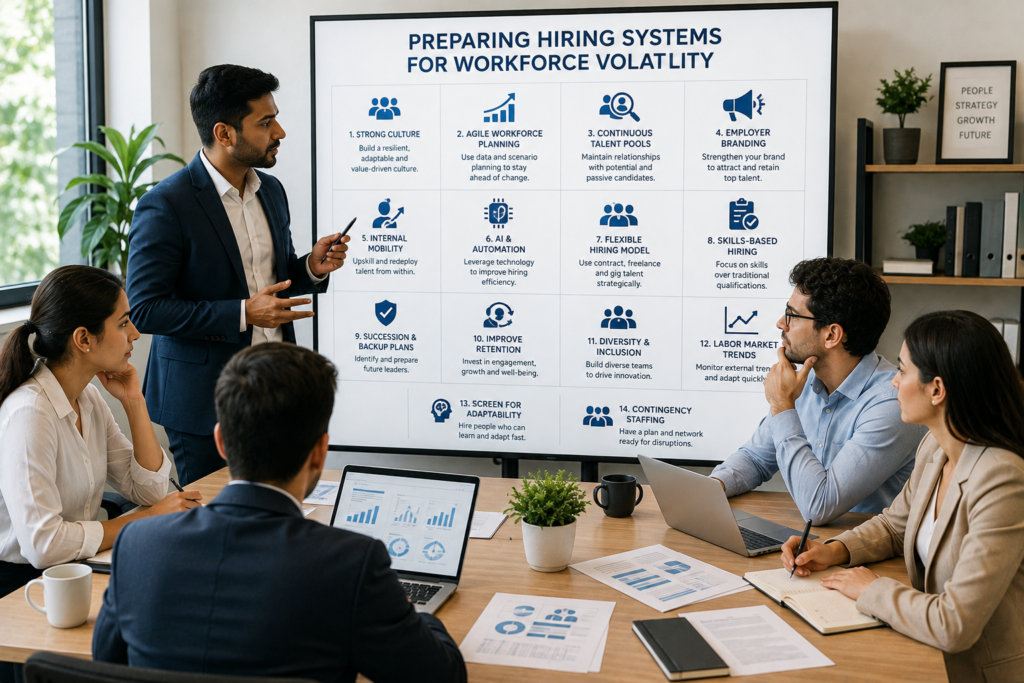
The preparation can be in the form of choosing the right team, employing the best technology, and planning the right campaign. The hiring process is a critical aspect of an organization’s success, and to ensure this goal is met, the organization needs to develop the following strategies to forestall any workforce volatility.
Cultivating Strong Culture
The hiring system can prepare for workforce volatility by cultivating a strong culture that fosters resilience, adaptability, and goal alignment. An organization may also prepare for contingencies by utilizing diverse perspectives that can challenge the status quo and engage innovative problem-solving.
By employing this strategy, the hiring system can evaluate candidates based on shared values such as resilience, integrity, tolerance, adaptability, initiative, and proactiveness to ensure that amidst volatility, the teams remain strong and united. The hiring system can withstand volatility when it prioritizes open communication, transparency with candidates about the company’s challenges, goals, and experiences, and builds trust among candidates.
Embracing Agile Workforce Planning
To prepare for workforce volatility, the hiring system can embrace agile workforce planning that shifts from reactive hiring to proactive planning. The preparation entails using AI and data analytics tools to predict hiring requirements based on economic shifts rather than fixed headcount targets. It could also employ strategies that shift away from a rigid, role-specific checklist and focus on core values such as adaptability, learning agility, and emotional intelligence.
Cultivating Continuous Talent Pools
Building a workforce that can solve contingencies in the hiring process entails cultivating a continuous talent pool that maintains a database of qualified candidates for future opportunities. It also requires maintaining consistent relationships with passive candidates, previous applicants, and freelancers.
Developing relationships with university pre-professional networks and training centers also helps cultivate a continuous talent pool, thereby helping the hiring system prepare for volatility. It also involves establishing internships and graduate training programs to identify future talent instead of starting from scratch.
Cultivating a continuous talent pool provides instant access to qualified prospects, eliminating time wastage by reducing time-to-fill when key staff depart or new business lines open.
Strengthening Employer Branding
By strengthening employer branding, hiring systems can also prepare for workforce volatility. They may also strengthen their employer brand by promoting organizational culture, offering competitive salaries, providing career growth opportunities, and maintaining strong communication and transparency with employees. Strengthening employer branding also enables hiring systems to build a strong, resilient talent pipeline, reduce cost-per-hire during economic downturns, attract passive talent when skills are scarce, and foster long-term employee loyalty and engagement.
Prioritizing Internal Mobility
By prioritizing internal mobility, hiring systems can prepare for workforce volatility. This is done by treating the existing workforce as the primary talent pool, implementing robust upskilling and cross-functional training programs to redeploy internal talent, especially when specific roles are open within the organization.
They can also help the hiring system guard against volatility by diversifying talent pools to offset local skill shortages, aiding deployment of expertise across inclusive markets, and encouraging organizational resilience.
By utilizing organizations like Deel, hiring systems can embrace global mobility to keep employees engaged and invested, fostering inclusivity and diversity, thereby allowing companies to tap into emerging talent hotspots.
Integrate AI and Automation
By using integrated and automated tools, a hiring system can prepare for workforce volatility through rapid scalability, skill-based talent mapping, and predictive workforce planning. It could employ an applicant tracking system (ATS) to speed up the hiring process, apply AI tools for screening resumes, matching candidates to different roles, and engage in automated repetitive human resources tasks encompassing onboarding and interview scheduling.
AI tools can be used to analyze market trends, drop rates, and business growth to predict hiring needs. This strategy enables hiring teams to scale operations rapidly without compromising the hiring process and candidate engagement.
Adopting a Flexible Hiring Model
Hiring systems can also prepare for workforce volatility by adopting a flexible hiring model that utilizes contract staffing, freelancers, temporary workers, part-time employees, and implements hybrid and remote work options to attract a broader talent pool.
By adopting a flexible hiring model, hiring systems can tap into a diverse talent pool that will help to scale the workforce and prepare for volatility. It also builds organizational resilience by enabling organizations to scale their workforce while reducing overhead costs during contingencies.
Focusing on Skills-Based Hiring
A hiring system can prepare for workforce volatility by hiring competent, highly skilled candidates as replacements rather than basing hiring decisions on qualifications. They can succeed in their preparation by encouraging continuous learning and building internal mobility opportunities for employees. By prioritizing skill-based hiring for roles such as AI engineers, user experience designers, compliance consultants, and data analysts, companies can hire the best talent who can handle any volatility in the hiring process.
Developing Succession and Backup Plans
Developing succession and backup plans will help hiring systems to prepare for workforce volatility by identifying specific roles and planning for employee replacement when vacancies arise. They can also cross-train employees to handle multiple responsibilities and create emergency staffing strategies for unexpected disruptions. Hiring systems can also prepare for volatility by developing succession and backup plans, which reduce reactive haste to fill sudden vacancies, and grooming candidates for future mobility and advancement. A backup plan ensures that talented, and competent candidates are ready to take the wheel when necessary.
Improve Employee Retention
To prepare for workforce volatility, the hiring system can improve employee retention by conducting regular employee engagement surveys, recognizing and rewarding performance, supporting employee well-being, work-life balance, and mental health. Hiring systems may also enhance employee retention by retaining skilled employees, appreciating them, and providing competitive pay, including incentives. Though some companies may find it difficult to retain employees for an extended period, it cannot be overstated that retaining employees will help hiring systems prepare for contingencies.
Enhance Diversity and Inclusion
Enhancing diversity and inclusion enables hiring systems to prepare for contingencies by expanding talent pools, mitigating AI-related biases, driving innovation, and meeting organizational goals.
The hiring system can prepare for workforce volatility by enhancing diversity and inclusion through hiring from diverse talent, ensuring equal opportunities, and inclusive workforce policies. The hiring system can also prepare for volatility by using standardized assessments, replacing unstructured interviews with structured interviews to ensure all candidates are judged consistently using the same metrics. Implementing blind screening, using an inclusive hiring team, using inclusive language, and opening applications to a wider audience may also help hiring systems to prepare for volatility.
Monitor External Labor Market Trends
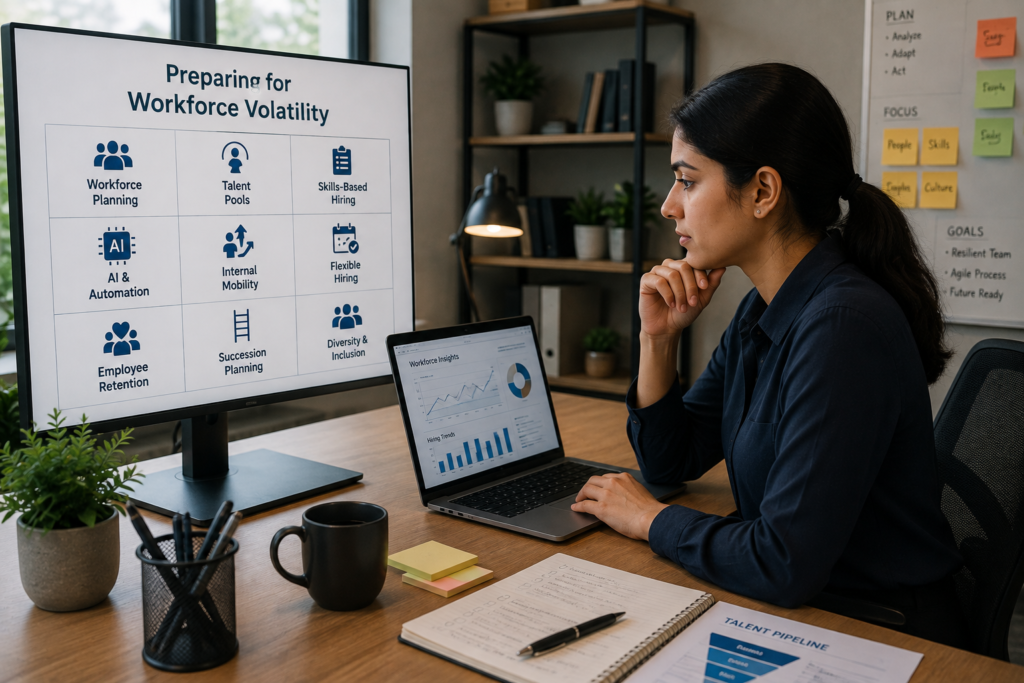
By monitoring external labor market trends, hiring systems may prepare for workforce volatility by tracking economic conditions, industry changes, and government labor policies. They can also prepare for volatility by staying informed about emerging skills, technological developments, and benchmarking against competitors’ hiring practices. Monitoring external market trends by anticipating talent shortages and adjusting salary standards will help hiring systems prepare for volatility.
Screening For Adaptability
Adaptability is a vital skill sought by companies that want to scale. It entails getting used to contingencies and staying focused during emergencies.
Screening for adaptability enables hiring systems to evaluate candidates for traits such as resilience, tolerance for ambiguity, initiative, and a continuous learning mindset, which may help hiring systems prepare for volatility.
Screening for adaptability prepares hiring systems for volatility through rapid workplace changes, skill gaps, and evolving job requirements. To achieve the aim of utilizing this strategy, the hiring system may use an adaptability skills test and a candidate adaptability quotient.
Implement Contingency Staffing
Due to unforeseen circumstances in the hiring process, the hiring system should implement contingency staffing to meet sudden spikes in demand without making long-term, high-risk financial commitments. The contingency staffing strategy will enable the hiring system to prepare for volatility through planning for sudden workload surges, seasonal spikes, and talent scarcity without long-term financial operations. This strategy facilitates instant scalability, mitigates risk, reduces burnout, and utilizes try-before-you-hire approach.
Understanding Workforce Volatility Before It Disrupts Hiring
Workforce volatility rarely arrives with a warning. It shows up as sudden resignations, unexpected market shifts, or a hiring freeze that turns into a hiring surge within weeks. Organizations that treat workforce volatility as a rare, one-time event are often the ones least prepared when it actually happens, because workforce volatility has become a recurring reality rather than an exception in most industries today.
The real challenge with workforce volatility isn’t predicting exactly when it will strike — it’s building a hiring system flexible enough to absorb the impact regardless of the trigger. Whether workforce volatility stems from economic downturns, skill shortages, or sudden business growth, the underlying problem is the same: a rigid hiring process cannot respond fast enough to protect productivity and morale.
Organizations that plan for workforce volatility in advance, rather than reacting to it after the fact, consistently recover faster and retain stronger teams. This is why proactive strategies — from talent pooling to skills-based hiring — matter so much. They don’t just prepare a hiring system for workforce volatility; they turn workforce volatility from a threat into a manageable, even predictable, part of long-term workforce planning.
Conclusion
Hiring systems need to understand the volatility that may hamper the hiring process and prepare themselves to handle it when it occurs. To achieve this aim, the hiring systems need to be proactive rather than reactive by leveraging technology, using strategic planning, investing in employee development, and utilizing flexible staffing strategies to better prepare for volatility to maintain long-term productivity and stability. They can also employ various strategies that are discussed in this article.
Frequently Asked Questions (FAQs)
How Do Executive Hiring Decisions Shape Business Success?
Effective hiring decisions help set direction, define organizational values, drive growth, and influence business strategies. These decisions contribute to a positive workplace culture, outstanding performance, improved productivity, and innovation, while poor hiring decisions can lead to conflict, ineffective management, and financial loss.
How Does a Transparent Hiring Process Improve Candidate Trust?
The hiring process is a crucial aspect of an organization that entails diverse operations and principles designed to facilitate fairness and transparency. Transparency is an essential aspect of business success that requires executives and business owners to critically ensure that the right candidates are hired.
What Are the Opportunities and Risks of Automation in Recruitment?
Automated recruitment is a speedy, reliable, and efficient technique for hiring skilled and experienced employees for an organization. It presents several opportunities for improving efficiency and achieving the best hiring outcomes. While it has been noted that automated hiring is very relevant and efficient in modern hiring processes in this digital era, there are diverse risks that exist with its practice
How Should Recruitment Be Managed for Distributed Teams?
Every business and organization has its own principles and rules guiding the recruitment and workforce distribution process, but they all aim to ensure that the right candidate is chosen. Managing recruitment for distributed teams is considered a core value in a successful and competent organization or business.
