


Discover how HR Technology is transforming recruitment with faster hiring, smarter decisions, and better candidate experiences.
Introduction: Recruitment Isn’t What It Used to Be
Hiring today feels very different from how it worked even a few years ago.
Earlier, recruitment was mostly manual. Recruiters would post jobs, wait for applications, and then spend hours going through resumes one by one. It was slow, sometimes inconsistent, and often overwhelming.
As companies started scaling and competition for talent increased, this approach began to fall apart.
There were simply too many applications and too little time.
That’s where HR technology started becoming essential.
It didn’t just make hiring faster; it made it more structured, more reliable, and far more strategic. Instead of relying only on instinct, recruiters could now use systems that support better decision-making.
So when we talk about the role of HR technology in modern recruitment, we’re not just talking about tools.
We’re talking about a complete shift in how hiring works.
Automating Repetitive Work So Recruiters Can Focus on What Matters
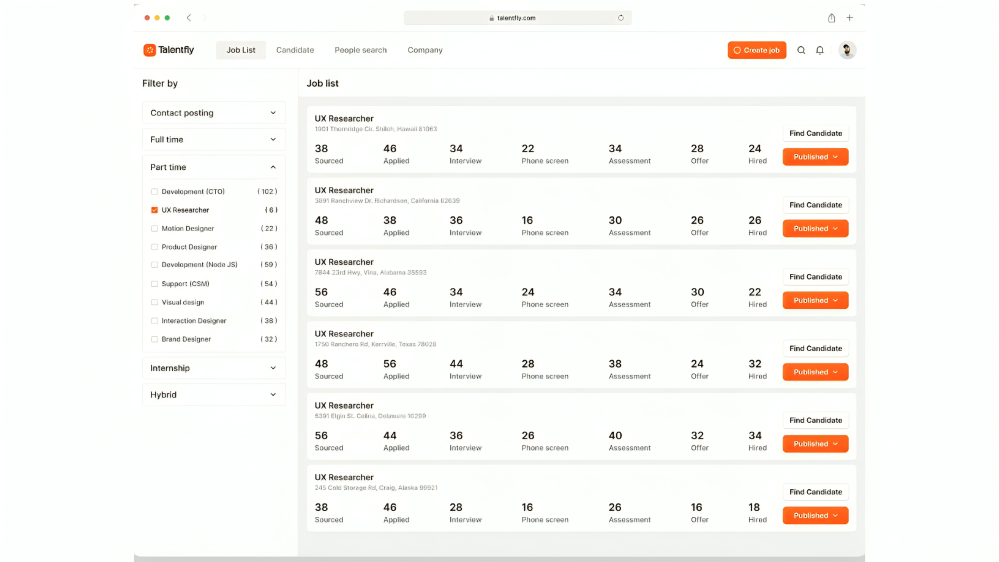
A large part of recruitment involves repetitive tasks.
Things like:
- Screening resumes
- Scheduling interviews
- Sending follow-ups
These are necessary, but they take up a lot of time. HR technology helps by automating these processes. The Applicant Tracking System ( ATS), for example, can filter resumes, track candidates, and even handle communication.
What this really means is recruiters don’t have to spend hours on admin work.
They can focus on understanding candidates, evaluating fit, and making better hiring decisions.
And that’s where real value lies.
Making Candidate Matching More Thoughtful and Accurate
One of the biggest challenges in recruitment is finding the right candidate, not just any candidate.
HR technology improves this by going beyond simple keyword matching.
Instead of just scanning resumes for exact words, modern systems look at:
- Skills
- Experience
- Role relevance
- Career progression
Some tools even understand context.
For example, they can identify that different job titles may involve similar responsibilities.
This reduces the chances of missing out on good candidates just because their resumes are worded differently.
In a way, it makes hiring feel less mechanical and more meaningful.
Speeding Up Hiring Without Making It Rushed

Speed is critical in modern recruitment.
The best candidates often have multiple offers. If your process takes too long, you lose them.
HR technology helps remove delays.
With tools like:
- Automated screening
- Video interviews
- Online assessments
Recruiters can move candidates forward much faster.
Virtual interviews, in particular, have changed how hiring works. Geography is no longer a limitation.
At the same time, faster hiring doesn’t mean careless hiring.
Structured workflows ensure that candidates are still evaluated properly.
Turning Recruitment Into a Data-Driven Process
Recruitment decisions were once based largely on intuition.
Now, data plays a big role.
HR technology allows teams to track:
- Time-to-hire
- Source effectiveness
- Candidate drop-offs
- Offer acceptance rates
This gives clarity.
Instead of wondering why hiring is slow or ineffective, teams can actually see where the problem is.
Over time, this leads to better strategies and more consistent results.
Because when decisions are backed by data, they tend to be stronger.
Improving the Candidate Experience Without Extra Effort
Candidate experience often gets overlooked, but it matters more than most teams realize.
A slow or unclear process can push even strong candidates away.
HR technology improves this naturally.
Candidates receive:
- Faster updates
- Clear communication
- Smoother application journeys
Some platforms even use chatbots to answer questions instantly.
This creates a better overall experience.
And when candidates feel respected and informed, they are more likely to stay engaged.
Bringing More Consistency and Fairness to Hiring
Bias in hiring is not always intentional, but it does happen.
Different recruiters may evaluate candidates differently.
HR technology introduces structure.
It ensures:
- Standardized evaluation criteria
- Consistent screening processes
- Skill-based comparisons
This reduces subjectivity.
While no system is perfect, structured hiring is far more reliable than purely instinct-based decisions.
Making Recruitment Scalable as Companies Grow
As organizations expand, hiring needs increase.
Managing large volumes of applications manually becomes difficult.
HR technology makes scaling possible.
It allows teams to:
- Handle more candidates efficiently
- Maintain consistency
- Manage multiple roles at once
This is especially important for fast-growing companies.
Without the right systems, hiring quickly becomes chaotic.
Connecting Recruitment With the Bigger HR Ecosystem
Recruitment doesn’t end when a candidate is hired.
It connects to onboarding, performance, and employee management.
HR technology integrates these processes.
For example:
- Candidate data flows into onboarding systems
- Hiring insights support workforce planning
- Performance data feeds back into future hiring decisions
This creates a more connected and efficient system.
Instead of working in silos, everything works together.
Common Challenges to Keep in Mind
Even with all these advantages, HR technology is not a complete solution on its own.
Some challenges include:
- Over-dependence on automation
- Poorly defined job roles
- Lack of human judgment
- Potential bias in algorithms
That’s why balance is important.
Technology should support recruiters and not replace them.
Frequently Asked Questions
What is HR technology in recruitment?
HR technology refers to digital tools and platforms that help automate, manage, and improve the recruitment process.
How does HR technology improve hiring?
It automates tasks, improves candidate matching, speeds up hiring, and enables data-driven decisions.
Is HR technology suitable for small businesses?
Yes. Many tools are scalable and help small teams manage hiring more efficiently.
Does HR technology remove the need for recruiters?
No. It supports recruiters but does not replace human decision-making.
Can HR technology reduce hiring bias?
It can reduce bias through structured evaluation, but human oversight is still necessary.
Conclusion
Recruitment today is no longer just about filling positions.
It’s about making better decisions, faster, without compromising on quality.
HR technology plays a crucial role in making this possible.
From automation to data insights, it helps organizations build more efficient and reliable hiring systems.
And in a competitive hiring environment, that’s not just useful; it’s essential.
Call To Action
Is your current hiring process keeping up with your growth?
If not, it might be time to rethink your approach.
Start exploring how HR technology can simplify your workflows, improve candidate matching, and help you hire with more confidence.
Because better hiring doesn’t happen by chance, it happens by design.
