


Recruitment is not just a hiring function—it is a growth engine. Businesses that fail to optimize recruitment workflows struggle with slow hiring cycles, poor candidate quality, and operational inefficiencies.
On the other hand, companies that build structured, data-driven recruitment workflows achieve:
- Faster time-to-hire
- Higher-quality talent acquisition
- Predictable hiring outcomes
- Scalable growth systems
If your hiring process feels inconsistent or reactive, the issue is not the talent market—it’s your workflow.
What Is a Recruitment Workflow? (And Why It Matters for SEO & Growth)
A recruitment workflow is a structured, repeatable process that moves candidates from job discovery to onboarding.
Core Stages of a Recruitment Workflow
- Workforce planning
- Job description creation
- Candidate sourcing
- Resume screening
- Interview process
- Evaluation and selection
- Offer management
- Onboarding
Without a defined workflow, hiring becomes inconsistent, slow, and difficult to scale.
Why You Must Optimize Recruitment Workflows
Optimizing recruitment workflows ensures:
- Reduced hiring delays
- Better candidate experience
- Improved employer branding
- Higher retention rates

Key Benefits of Optimizing Recruitment Workflows
1. Faster Time-to-Hire
A structured recruitment workflow eliminates unnecessary delays and reduces decision-making friction.
2. Improved Candidate Quality
Clear evaluation criteria ensure you hire based on performance, not assumptions.
3. Scalable Hiring Process
Standardization allows you to handle high-volume hiring without chaos.
4. Better Data-Driven Decisions
Tracking recruitment metrics helps continuously improve hiring performance.
8 Proven Strategies to Optimize Recruitment Workflows
1. Align Recruitment With Business Strategy
Most companies hire reactively. That’s inefficient.
To optimize recruitment workflows:
- Forecast hiring needs quarterly
- Identify revenue-critical roles
- Define success metrics before hiring starts
Hiring should be proactive, not reactive.
2. Standardize and Document the Recruitment Process
Lack of structure leads to delays and confusion.
A strong recruitment workflow should include:
- Defined hiring stages
- Clear role ownership
- Standard evaluation criteria
- Documented processes
Standardization improves speed, consistency, and accountability.
3. Use Recruitment Technology and Automation
Manual processes are a bottleneck.
Use tools like:
- ATS (Applicant Tracking Systems)
- Interview scheduling tools
- Resume screening automation
Automation helps optimize recruitment workflows by reducing repetitive tasks and improving efficiency.
4. Build a Continuous Talent Pipeline
Waiting for hiring needs creates urgency and poor decisions.
Instead:
- Engage passive candidates
- Maintain candidate databases
- Leverage referrals
- Use LinkedIn for long-term engagement
A strong pipeline reduces time-to-fill and improves hiring quality.
5. Improve Collaboration Between Hiring Teams
Misalignment slows everything down.
To fix this:
- Conduct structured intake meetings
- Define evaluation scorecards
- Set strict feedback timelines
Clear communication speeds up hiring decisions.
6. Track Recruitment Metrics and Performance
If you’re not tracking data, you’re guessing.
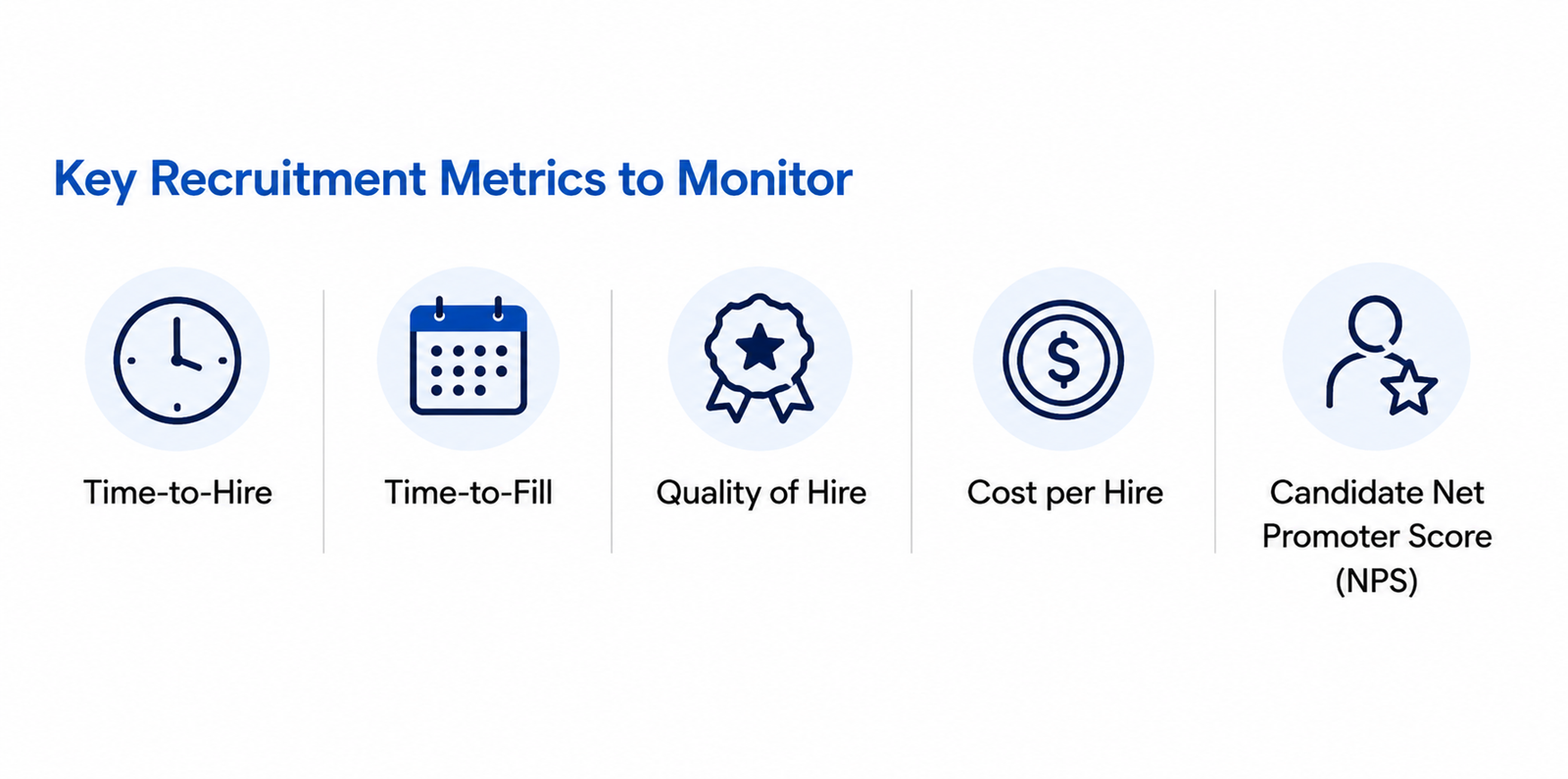
Key Recruitment Metrics to Monitor
- Time-to-hire
- Time-to-fill
- Cost-per-hire
- Offer acceptance rate
- Candidate drop-off rate
Data helps identify bottlenecks and optimize recruitment workflows continuously.
7. Enhance Candidate Experience
A poor candidate experience damages your brand and reduces offer acceptance rates.
To improve:
- Communicate clearly and consistently
- Provide feedback
- Respect candidate time
- Set expectations early
Candidates evaluate your company long before joining it.
8. Integrate Onboarding Into Recruitment Workflow
Recruitment does not end at the offer stage.
Effective onboarding includes:
- Pre-joining engagement
- Training plans
- Defined expectations
- Early performance milestones
Strong onboarding increases retention and productivity.

Common Challenges in Recruitment Workflow Optimization
1. Talent Shortages
High demand for skilled candidates makes sourcing difficult.
2. Internal Delays
Slow approvals and unclear ownership delay hiring decisions.
3. Remote Hiring Complexities
Distributed teams require better communication and evaluation systems.
4. Lack of Process Standardization
Unstructured workflows lead to inconsistency and inefficiency.
How to Continuously Improve Recruitment Workflows
Conduct Quarterly Workflow Audits
Regular reviews help identify inefficiencies and areas for improvement.
Optimize Based on Data
Use recruitment analytics to refine sourcing, screening, and interview processes.
Adapt to Market Trends
Stay updated with hiring trends, tools, and candidate expectations.
Frequently Asked Questions
What is recruitment workflow optimization?
Recruitment workflow optimization is the process of improving hiring steps to increase efficiency, speed, and candidate quality.
How do you optimize recruitment workflows?
By standardizing processes, using automation tools, tracking metrics, and improving collaboration.
Why is recruitment workflow important for business growth?
It ensures faster hiring, better talent acquisition, and scalable operations.
What tools help optimize recruitment workflows?
Applicant Tracking Systems, automation tools, and recruitment analytics platforms.
Conclusion: Recruitment Workflow Optimization Is a Growth Lever
If your hiring process is slow, inconsistent, or reactive, your recruitment workflow is broken.
Companies that optimize recruitment workflows:
- Hire faster
- Attract better talent
- Scale efficiently
This is not optional—it’s a competitive advantage.
Call to Action
Audit your recruitment workflow today.
Identify bottlenecks.
Standardize your process.
Track your metrics.
Because inefficient hiring is not just an HR problem—it’s a business growth problem.
