


Introduction
Think of a candidate applying for a job on Monday morning. She gets an automated confirmation and after that.… SILENCE! No update for the further process. No word if she’s still in the hunt. Two weeks later, she finally gives up on checking her inbox and accepts another offer, this time from a company that actually kept her informed at every stage.
This happens thousands of times a day in companies of every size, not necessarily a bad thing. It’s a symptom of a broken process where nobody, nor the candidate, the hiring manager, and even the recruiter, knows what’s actually going on. That’s the transparency gap in the recruiting process, and it’s silently costing companies their best candidates.This is exactly why process visibility matters more than ever in today’s competitive hiring landscape.
Today’s job seekers don’t want black box application process. They know what it’s like to track a food delivery in real time, or see a package crisscross the country on a map. Why would they be totally silent about something as important as their next job? Visibility into processes is not nice-to-have; it’s a competitive advantage. Those who don’t have it are losing talent to those who do.”
In this article, we’ll unpack the process visibility in a hiring context, its importance right now, and what it takes to build a recruitment process that keeps candidates, recruiters, and hiring managers truly know.
What is Recruitment Process Visibility?
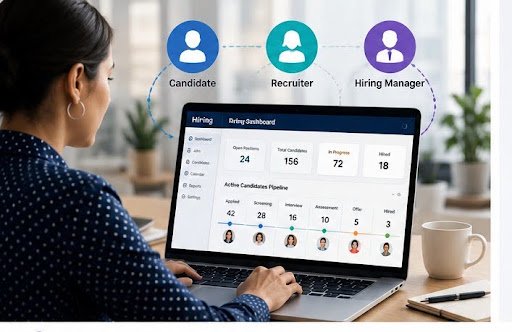
Recruitment process visibility means everyone involved in hiring, candidates, recruiters, and hiring managers can see the status of a role at any point of time. That’s the difference between a hiring process that feels like a sealed envelope and one that feels like an open conversation.
It’s worth differentiating between two terms that are often used interchangeably:
Recruitment Transparency and Recruitment Communication.
Communication is just passing along updates that include an email here, a phone call there.
Structurality is transparency and vice versa. It’s not a matter of whether someone remembers to share the information every now and then; it’s a matter of whether the information exists in the first place, and is it available to the people who need it.
A company may have good communication habits and not have real visibility into processes. It’s awesome when a recruiter can pick up the phone and call candidates personally. But without a common system to show where each candidate is in the pipeline, that information dies the second the recruiter goes on vacation or changes roles. Visibility means the data and status are built into the workflow itself, not depending on any one person to remember to update any of the others.
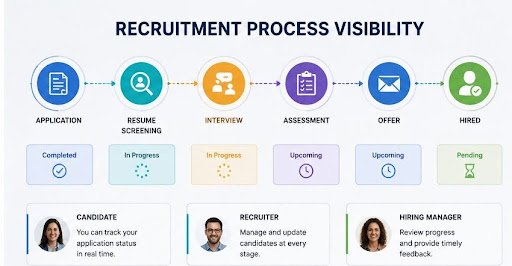
This is important because hiring is not a one-time event. It’s a process, application, screen, interview, decision, offer, and a break in any one of those steps can derail a good candidate relationship. “Transparency is the glue that keeps the chain together.”
Why Process Visibility Matters in Recruitment
Experienced candidates are better . Candidates seem to have less of a guessing game when they know what to expect, how many rounds of interviews, roughly how long a decision will take, and who they will be talking with. “The clarity of we expect to make a decision by next Friday” will cut anxiety more than silence ever could.
1. Builds Trust: Trust is built in a hiring process, just as it is in any relationship, through consistency. At every step, the candidate gets up-to-date information and starts to think that the company will be honest with its employees when they are hired.
2. Boosts Employer Branding: When candidates talk about their experience, they post on Glassdoor, LinkedIn about their working experience, and tell their friends in the same industry about it. Even if the outcome is rejection, a transparent process creates a lot more goodwill than one that leaves people wondering what happened.
3. Prevents Candidates from Dropping Off: Good candidates typically have more than one choice. They will often take another offer because the other company was quicker and more communicative, not because the job or the salary was better. Leave them dangling for two or three weeks and they will leave you.
4. Speeds Up Hiring: When everyone in the hiring workflow knows where each candidate is, fewer decisions get stuck because someone is waiting on information they already have somewhere else. Visibility removes the friction of constantly asking, “Where are we on this one?”
5. Boosts Recruiter Productivity: Recruiters can use that time to source candidates and build relationships instead of chasing down status updates from hiring managers or shifting through scattered email threads for half of their day.
6. Improved Collaboration Between Recruiters & Hiring Managers: A shared, visible pipeline helps hiring managers and recruiters stay on the same page, reducing the chances of miscommunication that can cause you to lose out on good candidates.
7. Results Better, More Consistent Hiring Decisions: The process is open and reproducible. You can more easily recognize patterns — like some stages taking too long, or some interviewers being bottleneck, making it easier to build a fairer, more consistent recruitment process over time.
Characteristics of a Transparent Recruitment Process
Understanding why process visibility matters starts with recognizing what separates a genuinely transparent recruitment process from one that only appears transparent on the surface:
- Realistic job descriptions: Not an aspirational wish list, but what the role really is, what it involves, and what it needs.
- Map out hiring phases: Candidates and internal teams know exactly what the path looks like from application to offer.
- Interview timelines: You know how long each stage will take.
- Frequent communication: Instead of waiting for the candidate to contact you, contact them.
- Candidate status updates: Get more than a generic “still under review.” See what candidates are actually doing in the pipeline.
- Feedback: (Even short feedback) To unsuccessful candidates, which protects the employer brand and goodwill with candidates.
- Candidate pipelines: These provide recruiters and hiring managers with a shared, real-time view of every candidate’s position.
- Applicant Tracking Systems: It pulls candidate data into one central place instead of leaving it in someone’s personal inbox.
- Recruitment analytics: Transform raw hiring activity into insight on what’s working and what’s not in your process.
This is where process visibility matters most — all ofthose things are not very good in themselves.. A great job description is useless if the interview timeline isn’t defined, and a top ATS doesn’t fix bad communication habits. “These pieces work together as a system, and that’s where process transparency comes from.”
Recruitment Visibility Technologies
Most of the workflows of modern recruiting are based on the:
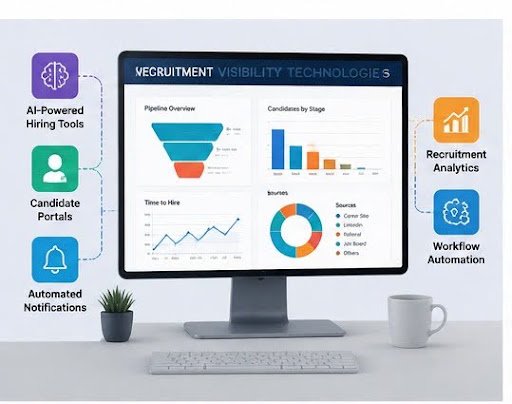
- Applicant Tracking Systems (ATS): A good ATS will collect all candidate information, track where each candidate is in the process, and be a single source of truth for recruiters and hiring managers rather than multiple spreadsheets and email threads.
- AI-powered hiring tools: They can help identify where candidates are getting stuck in the process, identify scheduling conflicts before they slow things down, and allow recruiters to focus their efforts where they will have the biggest impact.
- Candidate portals: This offers a direct, self-serve way for applicants to check their own status, which reduces the number of “just checking in” emails recruiters have to field, and gives the candidate a sense of control over the process.
- Automated notifications: Keep candidates informed with real-time notifications about interview confirmations, stage changes, next steps, and more without the recruiter sending each message individually.
Workflow automation can handle the tedious administrative tasks that tend to slow the process down, such as scheduling interviews or routing feedback forms, freeing up recruiters to focus on higher-value activities.
Common Visibility Issues In Recruitment
Even the most well-meaning recruitment teams struggle with challenges that show exactly why process visibility matters — and how easily it breaks down:
1. Often, poor communication is unintentional and the result of recruiters juggling too many open positions without a system for prioritizing follow-up. The answer is to build communication checkpoints into the workflow, not memory.
2. Manual recruiting processes (especially those still reliant on spreadsheets and inboxes) make it all but impossible to scale visibility. This is solved at the source by integrating core tracking into an ATS or recruitment platform.
3. When lines of responsibility between recruiters and hiring managers are not clear, there are gaps in the process where candidates get lost in the shuffle because each thinks the other is doing the follow-up. We need to close this entire pipeline at each stage about the ownership.
4. Delayed feedback on interviews affects the entire pipeline. Set hard deadlines on feedback and automatic reminders to keep decisions moving.
5. Leadership can’t see where hiring is falling short without reporting until it’s a visible problem, like an open role real-time unfilled for months. If recruitment analytics were reviewed regularly, this would be identified sooner.
Well-defined timelines and escalation paths when a stage stalls can help ease hiring bottlenecks often clustered around a single decision maker/approval step.
Different recruitment processes across teams or departments make it difficult to have any kind of unified visibility. A little wiggle room is fine, but the shared workflow needs to be standardized so we keep the bigger picture in mind.
Best Practices to Enhance Visibility
Once you understand why process visibility matters, these practices help you build it into daily operations:
1. Create recruitment workflows that are detailed so anyone on the team can easily see what happens at each step, from application to offer.
2. Set hiring timelines for each step of the hiring process and communicate those timelines to candidates at the beginning so they know what to expect from the very beginning.
3. Keep candidates informed as much as possible without the need for recruiters to manually follow up at each touchpoint. Automated communication is a key element.
4. Use an ATS – make it your one source of truth for candidate data, rather than personal inboxes or spreadsheets.
5. Regularly share hiring metrics with hiring managers so they can see the effect of their decisions and response times on the overall pipeline.
6. Trained hiring managers: Their role in keeping visibility, and how quickly they’re expected to give feedback after interviews.
7. Get In Touch With Candidates, even if there’s no news. A quick, “Still working on it, should have a decision next week,” is a good start.
8. Track your recruitment KPI: Similar to time-to-fill, time-to-feedback, and candidate drop-off rates, to spot visibility issues before they turn into talent loss.
Advantages of Recruitment Visibility
This is another reason process visibility matters — it’s not only about making candidates happy. It revolutionises the recruitment experience across the entire business.
1. Candidate experience improves instantly when people aren’t left wondering. This directly impacts whether top candidates will accept when offered.
2. Employer reputation gets better over time as candidates remember and tell others how they were treated, whether they got the job or not.
3. Hiring quality gets better through permanent staffing solutions, as visible processes make it easier to see where decisions are being rushed or good candidates are being lost due to delays.
4. Recruitment ROI increases when fewer candidates drop out of the process halfway through, saving the cost and effort of starting a search from scratch.
5. Collaboration between recruiters, hiring managers, and leadership is easier when everyone is looking at the same data, instead of making conflicting assumptions.
6. Retention is an indirect benefit, as the candidates who are treated with transparency and respect during the hiring process often walk into the organization on day one with a higher level of trust.
7. When recruitment data is visible and reliable, not anecdotal, Leadership Decision-making improves.
8. Scalability of recruitment is possible, as a visible, well-documented process can take on more hiring volume without collapsing in the way an informal, person-dependent process tends to.
The Future of Recruitment Visibility
Recruitment visibility is moving from being a manual activity to being increasingly embedded in the very infrastructure of hiring itself.
- Artificial intelligence is also helping to surface where candidates are stalling in the pipeline, and predicting bottlenecks are likely to occur before they cause actual delays.
- Predictive analytics is enabling recruiters to anticipate hiring needs and pipeline gaps further out, rather than reacting once a role has already been open too long.
- Real-time recruitment dashboards are now standard (not premium) features, giving recruiters and hiring managers live visibility rather than stale reports.
- Skills-based hiring is changing what visibility even tracks, shifting some of the focus away from credentials and toward demonstrated capability, this requires new ways to measure and report on candidate progress.
- Candidate self-service portals enable applicants to access their own status, reducing the communication burden on recruiters and improving the candidate’s sense of control.
- Automation continues to remove the repetitive coordination work that used to take up recruiter bandwidth, allowing teams to spend time on relationship-building and strategic hiring decisions.
Data-based recruitment has become the rule, not the exception. Companies like LinkedIn and SHRM often refer analytics-based hiring decisions as superior to decisions made just by intuition.
Today’s digital hiring ecosystem, integrated ATS, HR technology, communication tools, and analytics, is replacing the disconnected, single-purpose tools that many companies still rely on today.
Why Process Visibility Matters in Recruitment
Understanding why process visibility matters in recruitment can help companies create a more transparent and efficient hiring experience. When candidates, recruiters, and hiring managers can clearly see where an application stands, communication becomes easier and delays are reduced. Process visibility matters because it allows everyone involved in recruitment to understand what has been completed, what is currently in progress, and what needs attention next.
For candidates, better visibility creates a smoother experience because they are less likely to feel ignored or uncertain about their application status. For recruiters, process visibility matters because it makes it easier to track candidates, identify bottlenecks, and keep hiring activities organized. Hiring managers can also benefit by quickly reviewing progress and providing feedback when needed.
Using recruitment dashboards, automated notifications, shared tracking systems, and clearly defined hiring stages can improve visibility throughout the process. These tools make process visibility matters a practical part of modern recruitment rather than just a theoretical concept. Ultimately, improving visibility can support faster decision-making, better communication, and a more consistent candidate experience. Companies that understand why process visibility matters are better positioned to build an organized and transparent recruitment process.
Conclusion
Process visibility isn’t some back-office thing that only recruiters care about. It finds out if your best prospects are serious enough to go through a six-week interview process or quietly accept an offer elsewhere. It impacts whether hiring managers trust the recruitment function or are second-guessing it all the time.
And it’s the difference between your employer brand being a true reflection of the company you want to be known as, and the company candidates experience through an obscure, silent hiring process.
Organizations that offer visibility into the recruitment process – with clear timelines, the right technology, and consistent communication – aren’t just making candidates more comfortable. They’re building a hiring engine that attracts better talent, makes quicker and smarter decisions, and performs under pressure as their hiring needs increase.
This is where process visibility matters most — in a talent market where candidates have options and long memories, visibility is not a luxury.. It’s what separates the companies that can attract the best talent from the companies that lose it to someone who just keeps candidates in the loop.
FAQs
What is recruitment process transparency?
Process visibility matters because it gives candidates, recruiters, and hiring managers visibility into where a role or application is at any point in the hiring journey. “It’s not just the occasional communication; it’s more about whether you have the accurate, real-time information baked into the recruitment workflow itself.”
What Is The Importance of Transparency in Recruitment?
Transparency in recruiting builds confidence in candidates, alleviates uncertainty, and signals how a company is likely to treat its employees once hired. Moreover, it protects the employer’s reputation, as candidates often have a public forum to discuss their hiring experience, irrespective of the outcome.
Why is process visibility important for the candidate experience?
It makes the process a lot less stressful for candidates, as they know where they are in the process and how long it could take to get a decision, and what to expect next. A clear visibility replaces uncertainty with realistic expectations, which always adds up to a more positive candidate experience.
What improves recruitment visibility?
More transparency with centralized data & less manual updates: applicant tracking systems, recruitment dashboards, AI-powered hiring tools, candidate portals & workflow automation.
What blocks recruiting visibility?
The main obstacles include manual or spreadsheet recruitment processes, unclear ownership between recruiters and hiring managers, late interview feedback and a lack of consistent recruitment reporting.
What is transparent hiring going to look like in the future?
The future is more connected with digital hiring ecosystems where AI, predictive analytics, real time dashboards and candidate self-service tools work together to make recruitment visibility an automatic built-in standard not a manual effort.
Good intentions are not enough to create a hiring process that candidates can actually see and trust, you need the right strategy, technology and employer branding to support it. Mavenwit collaborates with organizations to design hiring processes that keep candidates engaged, hiring managers invested, and employer brand strong from the very first application to the final offer. Talk to mavenwit today and build a recruitment process that has transparency as your competitive advantage.
